
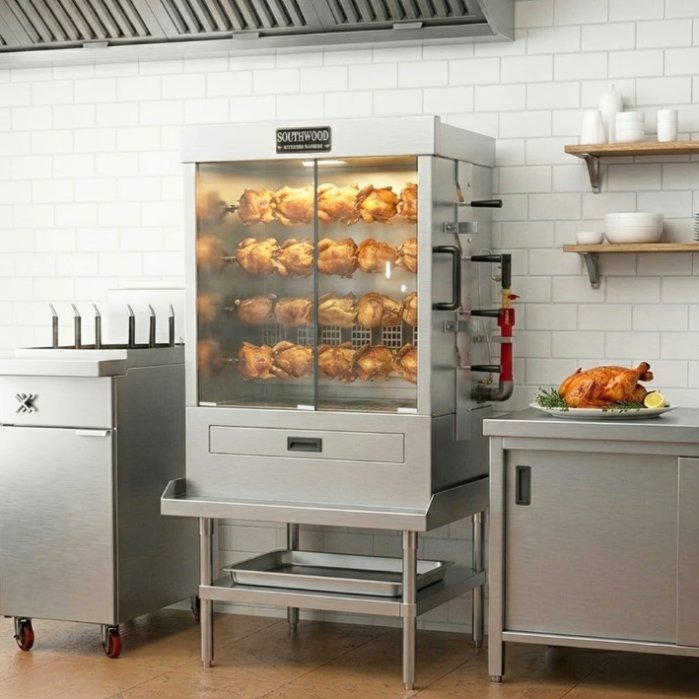
A chicken rotisserie oven has a way of drawing customers in before they even reach the counter. The aroma, the golden skin, and the sight of birds slowly turning behind glass all add value to a foodservice operation. That visual appeal fades fast if grease builds up, parts wear out, or the oven starts to perform below its usual standard. Jump into our guide below to learn how to properly maintain a chicken rotisserie oven.
Clean the Oven After Every Shift
Daily cleaning does far more than improve appearance. Layers of grease trap heat, create unpleasant odors, and leave burnt residue on fresh batches of chicken. Over time, that buildup can shorten the life of heating components and leave customers with inconsistent results.
Allow the oven to cool before any cleaning begins. Remove spits, baskets, and drip trays, then wash each piece with warm water and a food-safe degreaser. Wipe every interior surface with a soft cloth or non-abrasive pad so stainless steel keeps its finish instead of developing scratches.
The glass deserves just as much attention. Customers notice fingerprints, grease streaks, and smoke residue immediately. Clear glass gives diners a full view of your product and helps staff monitor food without opening the door.
Empty and Wash the Drip Pan
The drip pan catches grease, juices, and small food particles throughout the day. Once that pan becomes too full, cleanup turns into a much larger project. Overflow can also leave stubborn stains inside the cabinet and create smoke during the next cook cycle.
Empty the pan at the end of every shift. Wash it thoroughly with hot water and degreasing detergent before returning it to the oven. A clean drip pan also reduces unpleasant smells that linger around the kitchen.
Pay Attention to the Rotisserie Spits
The spits carry considerable weight every day. As they rotate through hundreds of cooking cycles, grease and carbon collect around the shafts and mounting points. If that residue remains in place, rotation may become uneven.
Inspect every spit before loading chicken. Bent rods, worn forks, or loose fasteners should receive attention immediately. Replacing a damaged spit costs far less than losing an entire batch of product during service. After washing, dry every component completely before storage. Moisture left behind can encourage corrosion over time.
Keep the Door Gasket Clean
A door gasket creates a tight seal that keeps heat inside the cooking chamber. Once grease coats the gasket or the material starts to crack, heat escapes around the door. Cooking times increase, and energy costs rise without anyone noticing at first.
Use a damp cloth to wipe the gasket after each cleaning session. Avoid sharp tools that could tear the rubber surface. If the gasket becomes brittle or no longer seals tightly, install a replacement before the problem grows.
Inspect Burners or Heating Elements
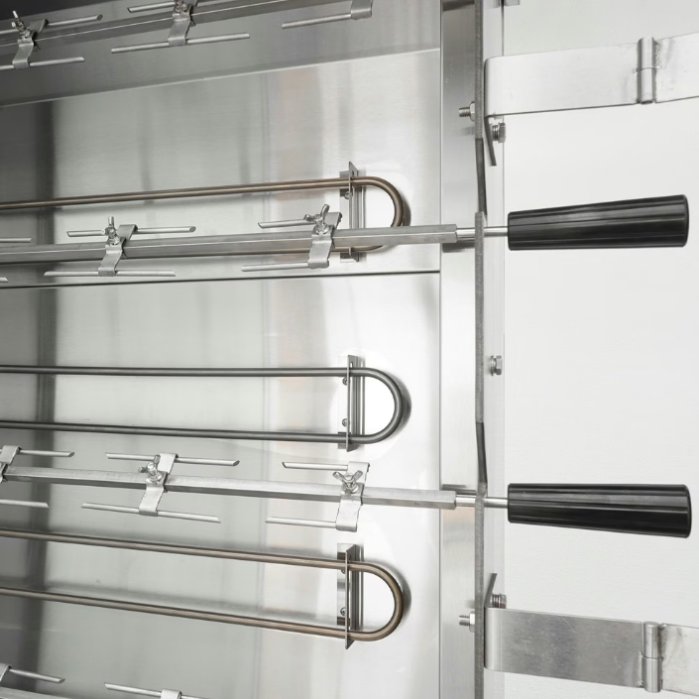
Gas and electric rotisserie ovens both rely on steady heat distribution. Burners should produce an even flame with consistent color. Electric heating elements should glow evenly across their length.
Any cold spots can leave chickens cooked unevenly. One side may brown beautifully while another remains pale. Customers notice that inconsistency immediately. Schedule a closer inspection if heat output changes unexpectedly. Strange smells, delayed heating, or unusual noises deserve prompt attention before they become expensive repairs.
Keep Air Vents Clear
Every commercial rotisserie oven depends on proper airflow. Vents help regulate temperature and prevent excessive heat from building inside mechanical compartments. Dust, grease, and debris gradually collect around ventilation openings.
A blocked vent forces internal components to operate under greater stress, shortening their service life. Take a few moments during weekly cleaning to wipe vent openings with a clean cloth or soft brush. That quick task supports steady performance throughout the year.
Lubricate Moving Parts When Recommended
Another critical way to properly maintain a chicken rotisserie oven is to consistently lubricate certain components. Many rotisserie ovens contain chains, gears, bearings, or rotating assemblies. Some models require periodic lubrication according to the manufacturer's recommendations.
Never apply household lubricants inside commercial cooking equipment. Food-grade products exist for this purpose and help moving components operate smoothly without contaminating food. Consult your owner's manual before adding lubricant because using more product does not always produce better results.
Check Temperature Accuracy
An oven that displays one temperature but cooks at another creates frustration for kitchen staff. Chickens may finish too early, remain undercooked, or develop overly dark skin before reaching the proper internal temperature. Verify temperature accuracy with a calibrated oven thermometer from time to time. Compare the reading with the control panel display after the oven reaches operating temperature. If large differences appear, calibration or professional service may solve the issue before food quality suffers.
Watch for Early Signs of Wear
Equipment rarely fails without warning. Small clues usually appear long before a major breakdown. Staff members who use the oven every day become the first line of defense.
Keep an eye out for signs such as:
- Longer cooking times
- Uneven browning
- Loose handles or hinges
- Unusual motor noises
- Excess smoke
- Flickering burner flames
- Door alignment problems
Addressing these issues early keeps repair costs manageable and reduces unexpected downtime. Invest in reliable commercial rotisserie ovens and monitor performance the moment you install them.
Create a Maintenance Schedule
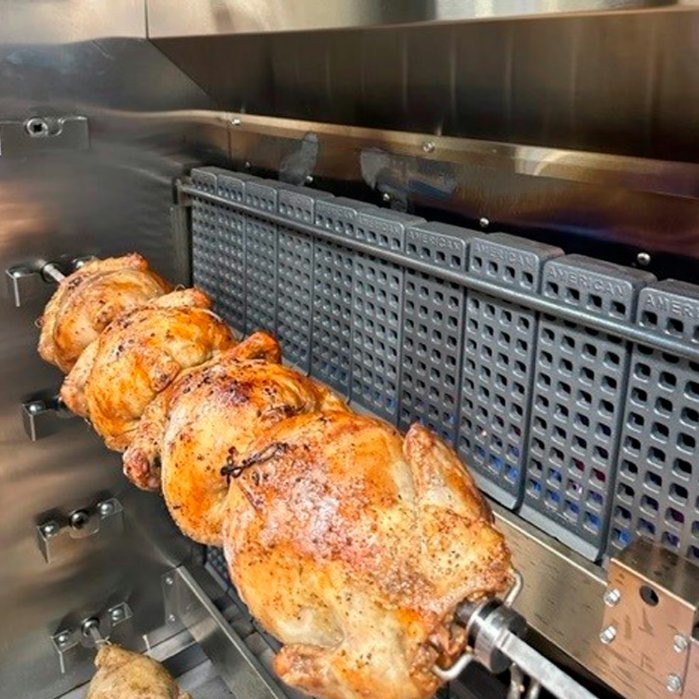
Routine maintenance becomes much easier when every task follows a schedule instead of relying on memory. A written checklist also creates consistency between employees and shifts. Daily duties should include cleaning interior surfaces, washing removable parts, wiping glass, and emptying the drip pan.
Weekly tasks can cover vent cleaning, inspections, and hardware checks. Monthly reviews allow staff to examine heating performance, rotating assemblies, and door seals more closely. Posting a maintenance checklist near the oven encourages accountability throughout the kitchen.
Train Every Employee
Even the highest-quality rotisserie oven depends on proper operation. New employees should learn correct loading techniques, cleaning procedures, and safe shutdown practices before using the equipment independently. Training also reduces accidental damage. Overloading spits, forcing doors closed, or using incorrect cleaning chemicals can shorten equipment life considerably. Experienced team members set the standard for everyone else.
A commercial chicken rotisserie oven represents far more than another piece of kitchen equipment. It produces one of the most eye-catching menu items in a restaurant, deli, grocery store, or market. Daily cleaning and timely replacement of worn parts help the oven deliver consistent results year after year. Rely on those habits to reduce repair costs and support dependable performance during busy service periods.