
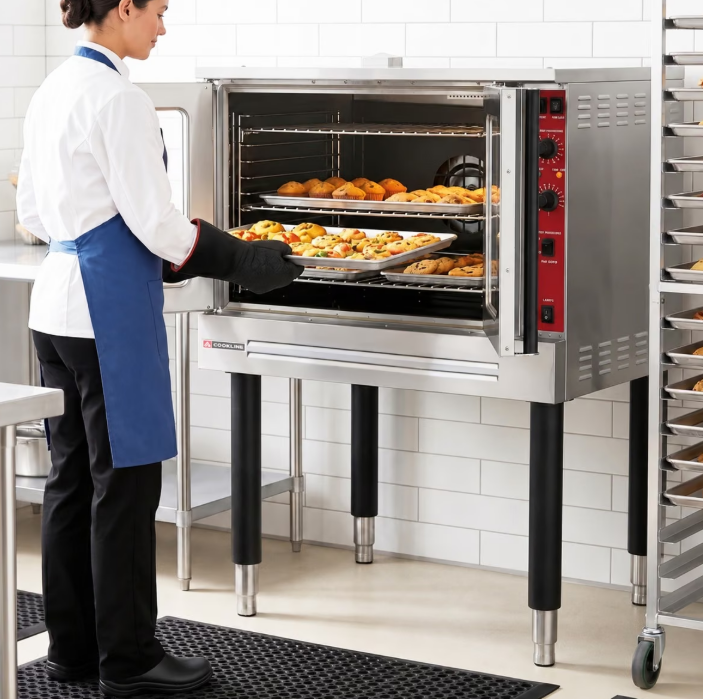
The oven you select for your commercial kitchen can influence everything from food quality to monthly utility expenses. Gas and electric models each have distinct advantages, but their performance varies based on your menu, kitchen layout, and daily production demands. A neighborhood bakery may have entirely different equipment preferences than a high-volume steakhouse. Explore our gas vs. electric ovens, a pros and cons breakdown, to discover the best fit for your foodservice establishment.
How Gas and Electric Ovens Operate
Commercial gas ovens rely on natural gas or propane to produce heat through a burner system. As the fuel combusts, heat circulates throughout the oven cavity and raises the interior temperature to the desired level. Some models also feature convection fans that distribute hot air more evenly across multiple racks.
Electric ovens generate heat through electrical resistance elements, typically located near the top or bottom of the oven cavity. These elements work alongside thermostats to regulate interior temperatures throughout each cook cycle. Electric models also come in conventional and convection configurations, with various capacities available for different commercial applications.
The Advantages of Commercial Gas Ovens
Gas ovens have earned their place in professional kitchens thanks to their versatility and potential for economical operation. Restaurants with established gas infrastructure may find these appliances particularly attractive. Their performance characteristics also complement the demands of fast-paced kitchens with substantial daily production quotas.
Rapid Preheat and Temperature Recovery
Many commercial gas ovens reach their target temperatures relatively quickly, particularly models with powerful burners. This characteristic suits restaurants where chefs must prepare successive batches of food throughout a busy service period. Less downtime between batches allows kitchen staff to maintain a steady pace.
Temperature recovery also deserves consideration in establishments with frequent oven access. Each time a chef opens the oven door, some heat escapes into the surrounding kitchen. A gas oven with adequate burner capacity can restore lost heat promptly and help maintain consistent production.
A Favorable Environment for Roasted Meats
Gas combustion produces water vapor that may contribute to a more humid oven environment, depending on the equipment's design and ventilation. Certain dishes respond well to this additional moisture, particularly large cuts of meat. Chefs who specialize in roast chicken, prime rib, or pork shoulder may appreciate this characteristic.
Gas ovens can also accommodate casseroles, roasted vegetables, and hearty entrées with excellent results. Their versatility makes them an attractive option for restaurants with extensive lunch and dinner menus. Proper temperature selection and recipe adjustments still play a role in the final product.
The Disadvantages of Commercial Gas Ovens
Despite their practical benefits, gas ovens present a few challenges that restaurant owners should consider before a purchase. Some drawbacks relate to the physical requirements of the equipment, whereas others concern long-term upkeep. These factors deserve particular attention if you plan to open a restaurant in an older commercial property.
More Complex Installation Requirements
A commercial gas oven requires access to a compatible fuel supply and appropriate connections. Establishments without an adequate gas line may face considerable installation expenses before the equipment becomes operational. Local regulations may also dictate specific ventilation and safety provisions.
You'll need a qualified professional to assess your kitchen infrastructure before installation. The assessment should account for fuel pressure, equipment specifications, and the demands of other gas-powered appliances. An undersized gas supply can compromise equipment performance across the entire kitchen.
Additional Maintenance Considerations
Gas ovens contain burners, ignition components, valves, and other parts that require periodic inspection. Grease accumulation or component deterioration can interfere with combustion and reduce equipment efficiency. Professional service may become necessary if the oven develops irregular flames or fails to reach its set temperature.
Kitchen managers must also remain alert to potential gas leaks and combustion hazards. Staff should understand emergency procedures and recognize when equipment requires immediate professional attention. Routine maintenance supports dependable operation and a safer workplace.
The Advantages of Commercial Electric Ovens
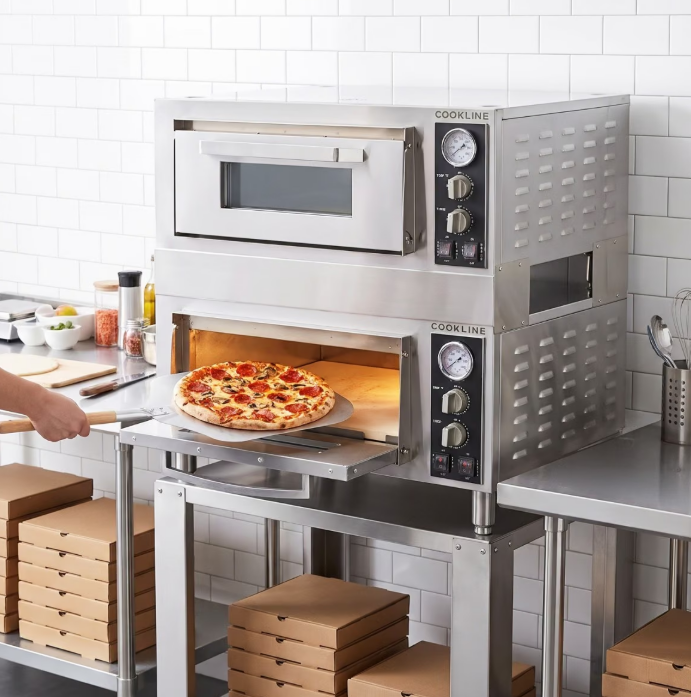
Electric ovens appeal to culinary professionals who value consistency and control over their food preparation environment. Their design lends itself to delicate recipes that leave little room for temperature fluctuations. Beyond culinary performance, these appliances offer practical benefits for businesses with certain infrastructure limitations.
Precise and Consistent Temperature Control
Electric ovens can provide excellent temperature stability, particularly models with advanced thermostats and well-designed heat distribution systems. This precision appeals to pastry chefs who work with delicate recipes that require carefully controlled temperatures. Even modest temperature fluctuations can affect the texture and appearance of certain desserts.
Consider a bakery that produces macarons, custards, and delicate sponge cakes throughout the day. A dependable electric oven can help staff reproduce the same results across multiple batches. Consistency also allows chefs to establish reliable preparation schedules with fewer unexpected adjustments.
Excellent Results for Crisp Textures
Electric ovens typically introduce less moisture from the heat source than direct-fired gas models. A comparatively dry oven environment can benefit foods that require crisp exteriors or delicate crusts. Artisan breads, flaky pastries, and certain cookies may respond particularly well to these conditions.
Actual results depend on oven design, airflow, humidity controls, and recipe requirements. Nevertheless, electric models offer considerable versatility for establishments with diverse pastry and dessert selections. Commercial bakeries can also explore specialized electric ovens tailored to their production needs.
Greater Flexibility in Certain Locations
An electric oven may suit a commercial property without an existing gas supply. Owners can avoid the expense of new fuel lines if the building already has adequate electrical infrastructure. This advantage can prove valuable for cafés, small bakeries, and foodservice businesses within shared commercial properties.
Electric ovens also eliminate the need for an on-site gas connection to the appliance itself. Ventilation requirements still apply according to equipment specifications, menu applications, and local regulations. Consult a qualified installer before you finalize your equipment selection.
The Disadvantages of Commercial Electric Ovens
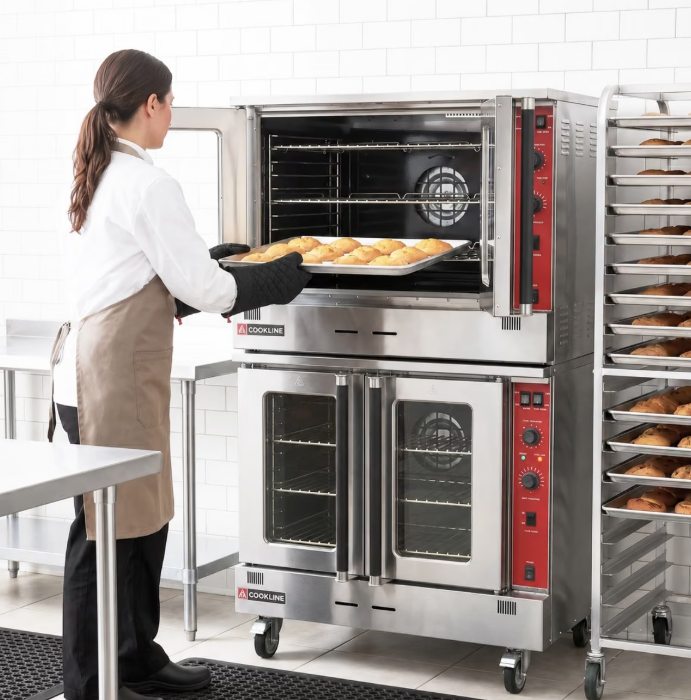
An electric oven may deliver excellent culinary results, but its operational demands don't suit every establishment. The financial implications extend beyond the initial purchase price, particularly for businesses with substantial daily production needs. Restaurant owners should examine their facility's capabilities and anticipated expenses before they commit to an electric model.
Potentially Higher Operational Costs
Electricity rates can place additional financial pressure on establishments with extensive oven use. Large commercial models may draw considerable power, especially during peak production periods. Businesses subject to electrical demand charges could encounter further expenses.
Equipment efficiency and insulation quality can influence overall energy consumption. Compare models with similar capacities and evaluate their power requirements against your anticipated workload. The least expensive oven upfront won't necessarily deliver the lowest lifetime cost.
Electrical Infrastructure Limitations
High-capacity electric ovens may require dedicated circuits, specific voltages, or three-phase power. Older commercial properties don't always have the electrical capacity to accommodate these appliances alongside existing equipment. Panel upgrades and additional circuits can increase project expenses considerably.
Have a licensed electrician evaluate your facility before you commit to a particular model. Account for refrigerators, dishwashers, mixers, and other appliances that operate simultaneously. Your electrical system must support the collective demands of your commercial kitchen. With this guide to gas vs. electric ovens, a pros and cons breakdown, you can approach your next equipment purchase with greater confidence. Make the right choice and find a commercial oven for sale today.