
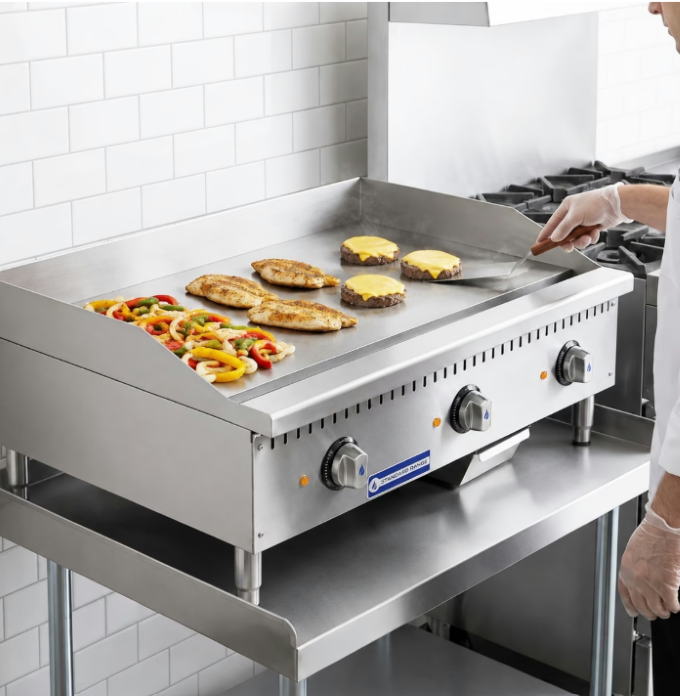
A commercial griddle can handle breakfast rushes, lunch service, late-night orders, and nearly every shift between. That workload leaves behind grease and stubborn marks that can affect the surface over time. A good care routine helps the plate stay dependable, gives staff a cleaner workspace, and can protect food quality from one shift to the next. This guide to cleaning your commercial griddle the right way lays out a practical approach without extra fuss. Use these tips to keep your hardware clean and ready for the next shift.
Why a Clean Griddle Deserves Daily Attention
A griddle sits at the center of many restaurant lines. Eggs, burgers, pancakes, vegetables, cheesesteaks, and countless other menu items may all touch the same surface in one service period. Grease and food debris can build up fast, especially after a hard rush.
That residue can create more than an unattractive cooktop. Old carbon may transfer bitter flavors to fresh food, and thick deposits can interfere with direct contact between food and the plate. A clean surface also gives staff a better view of the plate, so they can spot wear, rough areas, or other problems before those issues become harder to address.
Start With the Manufacturer’s Directions
Before a scraper or chemical touches the plate, check the manual for your exact unit. Griddle plates can differ by material and manufacturer, so one care method doesn’t fit every model. A product or tool that works well on one surface may damage another.
Pay close attention to approved cleaners, safe temperature ranges, water use, and any special care notes for the plate. Chrome, polished steel, and other surfaces can have very different requirements. If the manual calls for a specific pad or cleaner, follow that direction rather than rely on a generic back-of-house habit.
Gather the Right Tools Before You Start
A smooth routine starts with the proper supplies close at hand. Staff shouldn’t have to search the dish area for a scraper halfway through the job. Keep manufacturer-approved supplies in a set location near the line, as long as that location meets your workplace rules.
Your setup may include:
- A commercial griddle scraper
- Heat-resistant gloves
- Approved pads or screens
- Manufacturer-approved griddle cleaner
- Clean cloths or towels
- A container for debris and grease
Avoid improvised tools that can gouge, scratch, or otherwise harm the plate. Sharp metal corners and harsh abrasives may leave permanent marks on some surfaces.
Remove Loose Food and Grease First
Once service ends, clear away loose scraps and excess grease based on the manufacturer’s procedure. A scraper can help push debris toward the grease trough without a lot of extra effort. Hold it at a safe angle and use controlled strokes rather than force.
Empty the grease drawer or trough before residue piles up. A full grease area creates a mess fast and adds needless work to the close. Give splash guards and nearby ledges attention, too, since crumbs and oil tend to collect along those edges.
Use Heat With Care
Some griddle care procedures call for work on a warm surface, but the proper temperature depends on the unit and cleaner. Never assume hotter means faster. Excess heat can create a burn hazard, damage certain products, or cause a cleaner to react in a way the manufacturer didn’t intend.
Follow the stated temperature guidance before the next step. Staff should also wear proper protective gear for the task. A few extra minutes of patience can save the plate from damage and protect employees from avoidable contact with hot grease or metal.
Apply the Approved Cleaner
After loose debris is gone and the plate reaches the proper state, apply only a cleaner approved for that griddle. Follow the product directions for amount, contact time, and removal. More chemical isn’t automatically better, and excess product can add extra rinse work.
Use the recommended pad, screen, or other tool to loosen residue. Work across the plate in manageable sections so no area gets neglected. Pay extra attention to dark deposits near high-use zones, but don’t attack stubborn spots with an unapproved abrasive.
Don’t Forget the Grease Trough and Exterior
The cooktop gets most of the attention, but the grease trough, backsplash, control area, and exterior deserve care as well. Wipe away residue from these areas with products suitable for each surface. Keep excess liquid away from controls and other areas the manufacturer says to protect.
Grease can hide along seams and corners, so a quick visual check helps staff catch leftover soil. Clean exterior stainless steel with the grain if the manufacturer recommends that method. The result should look orderly without scratches, streaks, or chemical residue.
Rinse or Wipe the Surface as Directed
Our guide to cleaning your commercial griddle the right way also focuses on one of the essential tasks; wiping down the griddle. Cleaner residue has no place on a food-contact surface. Follow the unit and chemical instructions for the correct final wipe or rinse process. Use clean towels and water if those directions call for them.
Don’t flood the griddle or pour water into areas not designed to receive it. Excess liquid can reach internal components or create a hazard around the line. Once the surface is free of cleaner and debris, dry it based on the manufacturer’s directions.
Set a Routine for Every Shift
Consistency starts with a written procedure that the whole line crew can follow. A short checklist can cover scrape-downs, grease-trough care, end-of-day steps, and deeper maintenance at the interval the manufacturer recommends. Assign responsibility by station or shift so the task doesn’t disappear after a hectic service.
Managers can also add a quick plate inspection to the routine. Look for deep scratches, uneven heat, damaged controls, loose parts, or residue that returns despite proper care. Those signs may point to a service need rather than a sanitation problem.
Cleaning the Right Way Starts With Good Habits
A griddle earns its place on the line through dependable day-to-day performance, and proper care supports that role. The best routine doesn’t need to feel complicated. Follow the manual, use approved tools, remove residue thoroughly, care for the grease system, and inspect the plate before the next shift. If your current griddle has reached the point where repairs, surface damage, or capacity limits disrupt service, Kitchenall can help you shop for a replacement. Browse Kitchenall’s restaurant supplies for commercial griddles and other equipment to find options that fit your menu.