
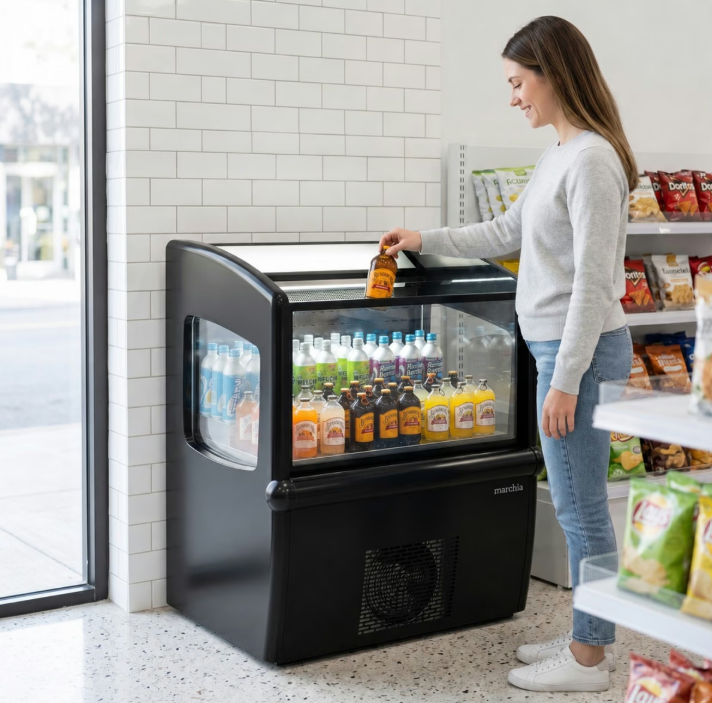
Open air coolers, also called air curtain merchandisers, keep chilled products visible and within easy reach without a front door between the customer and the merchandise. That open format reduces a small physical barrier in the purchase process. A guide to boosting impulse sales with open air coolers explores how restaurants, cafés, delis, convenience stores, and other food businesses can use accessible refrigerated displays to encourage extra purchases. If your business wants to put more grab-and-go products in front of customers, take a closer look at how an open air cooler could fit into your sales floor.
Put the Cooler Where Customers Naturally Pause
Location has a major influence on how customers interact with an open air cooler. A unit tucked into a quiet corner may hold plenty of attractive merchandise, but few guests will notice it. Instead, look for areas where customers naturally slow down, wait, or pass on the route to the register.
The checkout area is a strong example. A customer who waits for an order has time to notice bottled drinks, desserts, fruit cups, or packaged snacks nearby. A cooler near the entrance can serve another purpose by introducing ready-to-go choices as soon as a guest arrives. In a café, a unit near the order line can place chilled products within arm's reach before the customer reaches the counter.
Traffic flow matters, too. The cooler shouldn't create a narrow aisle or force guests into an awkward path. Give customers enough room to stop, browse, and select a product without disrupting the rest of the line.
Choose Products That Suit Quick Decisions
Impulse purchases tend to work best when customers can understand the product at a glance. Familiar beverages, packaged desserts, sandwiches, salads, yogurt, fruit, and other grab-and-go foods fit naturally into an open refrigerated display. Clear labels and recognizable packaging can help customers reach a decision without much thought.
Price also deserves attention. A guest may readily add a modestly priced drink or snack to an existing order. A high-ticket product usually requires more consideration, so it may not suit the same sales strategy.
Think about how products complement the rest of your menu as well. A deli can place bottled drinks close to its sandwich counter. A bakery can present chilled desserts or beverages near pastries and lunch items. The cooler then becomes part of the customer experience rather than a separate fixture with no connection to the main purchase.
Create Product Pairings That Feel Natural
A good impulse sale doesn't have to feel random. Products can support one another and give customers an easy reason to add another item to their order. A bottled cold brew beside breakfast items feels logical, just as a soft drink beside prepared sandwiches fits a lunch rush.
Seasonal habits can guide the assortment, too. Cold beverages may receive more attention during warm months, and rich desserts can appeal to customers after a meal. Stores can adjust the product mix as customer preferences change throughout the year.
This approach also gives operators room to test different combinations. If a particular beverage sells well beside a popular entrée or snack, give that item more space. Sales data can reveal patterns that aren't obvious from casual observation.
Keep the Display Easy to Read
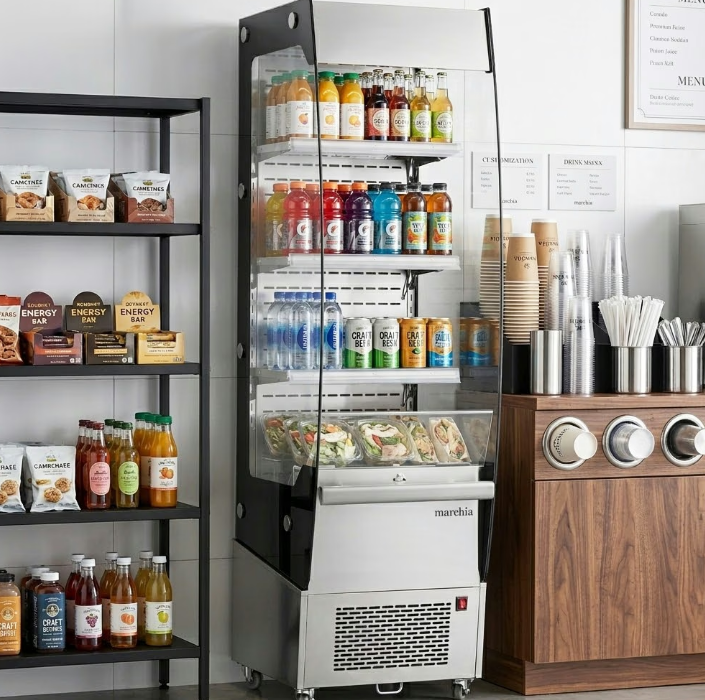
A packed cooler may seem like a good use of space, but too much visual clutter can work against the sale. Customers need to recognize their options fast. Clean rows, visible labels, and logical product groups make the display easier to scan.
Place popular items where customers can see and reach them with little effort. Products with strong package design can also help draw attention from several feet away. Similar items should stay together so customers don't have to search through unrelated products.
Leave enough visual separation between categories. For example, bottled water can occupy one area, specialty drinks another, and prepared foods a separate shelf. A clear layout gives the merchandise a polished appearance and helps each category stand on its own.
Use the Right Cooler Size for the Space
A larger cooler isn't automatically a better choice. The unit has to suit the available floor space, expected product volume, and customer traffic. An oversized merchandiser in a compact café can dominate the room, but a small unit in a busy market may need constant restocks.
Consider the cooler's dimensions before purchase, along with shelf capacity and access to the installation area. Electrical requirements and manufacturer clearance specifications also deserve review. A thoughtful equipment choice can help the cooler feel like a natural part of the operation.
Product volume should influence the decision as well. A business with a broad grab-and-go menu may benefit from several shelves and a wider display. That said, a bakery that wants to offer a small selection of bottled drinks may have better results with a compact model near the register.
Protect the Visual Appeal of the Merchandise
A guide to boosting impulse sales with open air coolers must also address visual appeal. Impulse sales depend heavily on presentation. Empty gaps, crooked packages, damaged labels, and visible spills can reduce the appeal of an otherwise strong product selection. Staff can check the cooler throughout the day and restore the display after busy periods.
Product rotation also deserves a place in the daily routine. Follow food-safety requirements and manufacturer guidance for storage temperatures, shelf life, and product placement. Older inventory should receive attention according to the operation's established stock-rotation procedures.
The cooler itself needs regular care as well. Clean shelves, clear price labels, and a tidy exterior support a professional presentation. Follow the equipment manufacturer's instructions for cleaning, maintenance, and safe operation.
Adjust the Assortment Based on Actual Sales
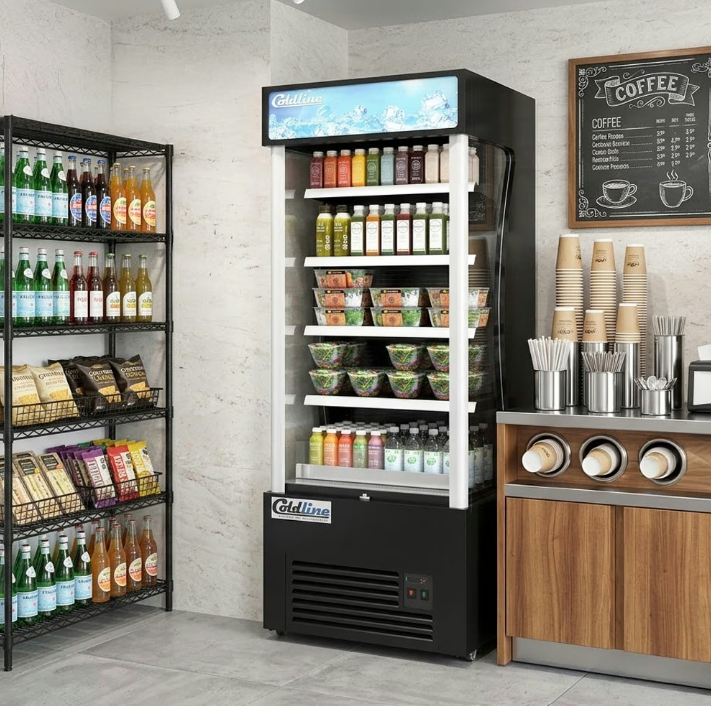
An open air cooler shouldn't remain static after installation. Product demand can shift with the season, menu, customer base, and time of day. Sales reports can help operators identify products that deserve more shelf space and products that occupy space without enough return.
Staff observations can add useful context. A beverage may sell rapidly during lunch but receive little attention later in the day. Another item may perform well near the register but poorly near the entrance.
Small adjustments can reveal valuable patterns. Test shelf positions, product combinations, price points, and assortment size over time. Use the results to refine the display rather than rely on assumptions about customer behavior.
Boosting Impulse Sales Starts With Smart Placement
An open air cooler gives customers direct access to chilled merchandise at the exact moment an extra purchase may appeal to them. Strong placement, a focused assortment, logical pairings, and an orderly display can turn unused floor space into a more productive part of the business. The goal isn't to crowd customers with products at every turn. Instead, create a convenient display that fits naturally into the path they already take through your restaurant, café, deli, or market. Select high-quality grab-and-go coolers so you can start maximizing your sales today.