
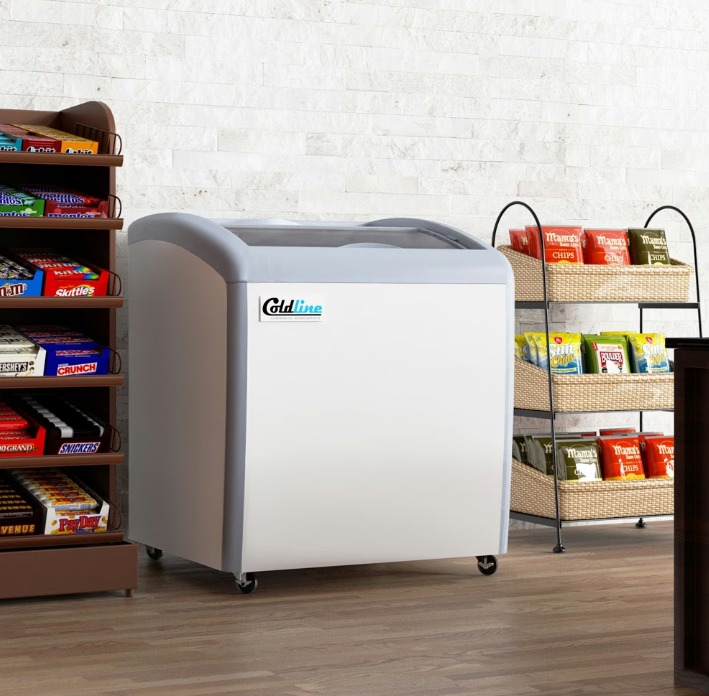
Frozen desserts have plenty of visual appeal on their own, but the right display freezer gives them a better stage. Customers can see the colors, textures, flavors, and toppings before they place an order. Plus, staff can serve each portion from a case built for the task. A complete guide to ice cream and gelato display freezers will help you use these machines to the best of their abilities. Find out how you can use the right hardware to display and sell frozen treats today.
What Is an Ice Cream or Gelato Display Freezer?
An ice cream or gelato display freezer combines frozen storage with a customer-facing presentation area. Unlike a standard reach-in freezer, the cabinet puts products on display through curved or flat glass and provides staff access to the pans or tubs inside. The result is a piece of refrigeration equipment that becomes part of the service counter rather than a unit hidden in the back.
These cases fit naturally into gelaterias, ice cream shops, bakeries, cafés, restaurants, and other foodservice concepts with frozen desserts. Models vary in capacity, dimensions, glass design, pan configuration, and refrigeration setup. That variety gives operators room to select a case based on both their menu and available floor space.
Gelato and Ice Cream Have Different Display Needs
Ice cream and gelato may share the same menu board, but they don’t have identical characteristics. Gelato has a dense, soft texture and commonly appears in shallow display pans with decorative peaks, sauces, fruit, nuts, or other garnishes. Traditional ice cream tends to have a firmer texture and may sit in deeper tubs or containers.
For that reason, operators shouldn’t treat every frozen dessert case as interchangeable. The freezer’s intended product type, temperature range, pan layout, and storage format all deserve attention before purchase. A case designed around the dessert you actually serve can create a smoother service setup and a more attractive counter. Luckily, you can find a wide assortment of commercial kitchen freezers online right now.
Start With Pan Capacity and Menu Size
Pan capacity is one of the first specifications worth reviewing. A small café that serves six core gelato flavors has very different needs from a dessert shop with a large rotating menu. More pan positions give customers extra variety, but they also require more floor space and more product to keep the case full.
Consider how many flavors you expect to offer during a normal service period rather than selecting capacity based on the largest menu you might run someday. A well-stocked smaller case can look more inviting than a huge cabinet with empty positions. If seasonal flavors come and go, a little extra capacity can still provide useful flexibility.
Think Beyond the Number of Flavors
The listed pan count doesn’t tell the entire story. Pan dimensions and orientation also affect day-to-day use. Look at the case specifications alongside the pans or containers your operation plans to use, especially if you already have a frozen dessert program.
Staff workflow deserves attention here as well. Servers need enough room to scoop cleanly, replace pans, and move from one flavor to another without awkward reaches. Those small details become much more noticeable during a Friday-night rush.
Pay Attention to Visibility
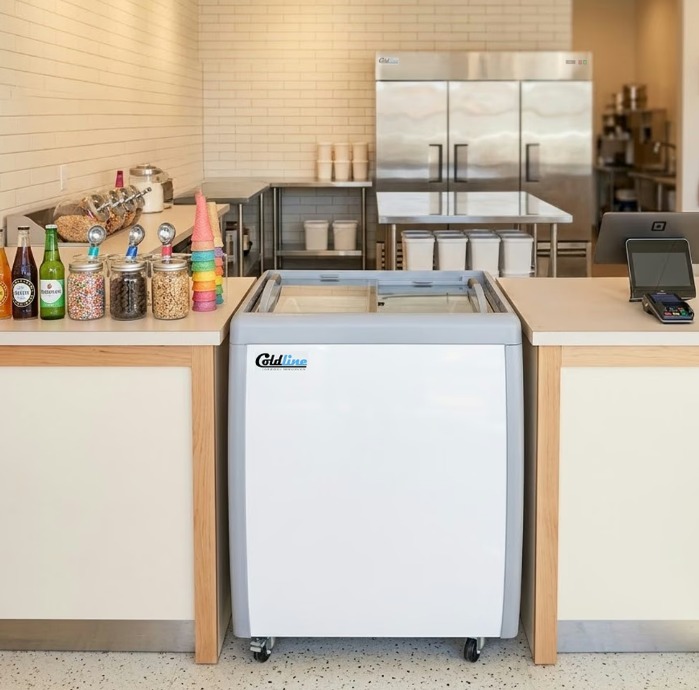
A display freezer has two jobs: hold frozen desserts and present them well. Glass shape, case height, interior layout, and lighting all influence how easily customers can view the selection. A case with a broad sightline can turn rows of colorful gelato into part of the shop’s visual identity.
Curved glass creates a classic display-case appearance and can suit traditional ice cream parlors or gelaterias. Flat-glass models offer a clean, contemporary profile that can pair nicely with modern counters. Neither format suits every business, so consider the surrounding décor and the customer’s view from the ordering area.
Clean glass matters just as much as its shape. Fingerprints, smudges, and residue can distract from even the best dessert presentation. Add glass care to the regular cleaning routine so customers see the product first.
Measure the Space Before You Buy
A display case can look compact in a product photo and feel much larger once it arrives at the counter. Check the unit’s exterior width, depth, and height against the actual installation area. Leave room any clearance requirements, such as nearby foot traffic or ventilation needs.
Delivery access deserves the same level of attention. Measure doorways, hallways, elevators, corners, and other tight points along the route into the business. Discovering that a freezer can’t clear the front door after delivery creates a problem nobody wants on opening day. Operators should also confirm electrical requirements and other installation details before the unit arrives. Product specifications and manufacturer documentation are the right sources for those requirements.
Check Refrigeration and Defrost Features
Product specifications deserve a close read before any commercial freezer purchase. Review the listed operating temperature range, refrigeration system, defrost method, controller, and other performance features supplied by the manufacturer. Match those specifications to the frozen product you intend to sell.
Automatic defrost can reduce some routine labor associated with frost accumulation, though features vary by model. Digital controls can also give staff a convenient way to view or adjust settings on units equipped with them. Rather than assume every case includes the same technology, compare the specifications of individual models.
Don’t Forget Cleaning and Routine Care
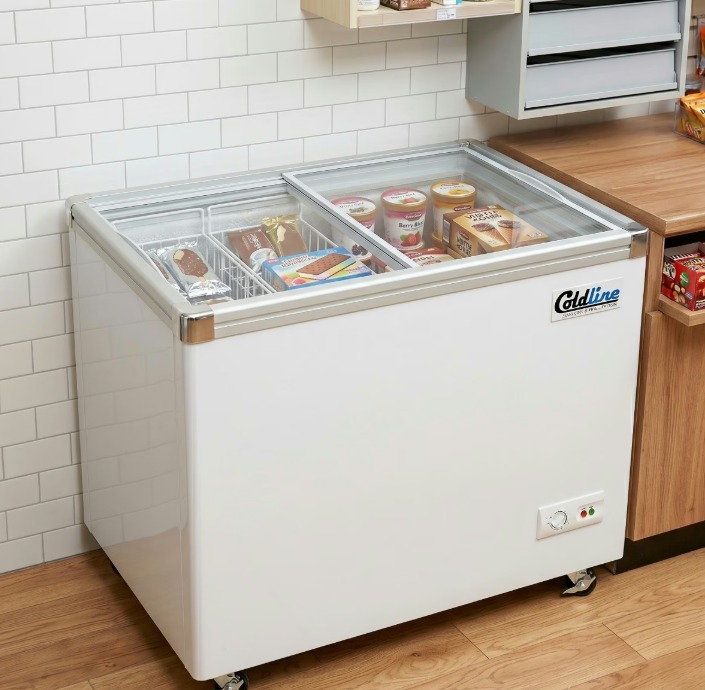
Frozen dessert cases need regular care to stay presentable and operate as intended. Glass, interior surfaces, doors, handles, pan areas, and other food-contact or customer-facing surfaces can collect residue through daily service. Follow the manufacturer’s care instructions for the specific model.
Condenser care and other maintenance tasks also depend on the equipment design. A practical maintenance schedule helps staff keep those tasks from disappearing during busy weeks. Keep the manual accessible and train employees on the procedures that apply to their station.
Finding the Right Fit
Our complete guide to ice cream and gelato display freezers showcases how important this equipment is in a business. The best display freezer for a business isn’t automatically the largest model or the case with the longest feature list. It’s the one that fits the menu, service style, available space, and product presentation you want customers to see
A thoughtful choice can also support a cleaner, more polished dessert counter. Your case becomes part storage equipment, part workstation, and part product showcase. When those roles work together, staff get a practical setup and guests get an appealing view of the menu. Browse the available display refrigeration options when you’re ready to compare equipment for your frozen dessert program.